








BEST EN Think Tank X at MODUL 27 – 30 June

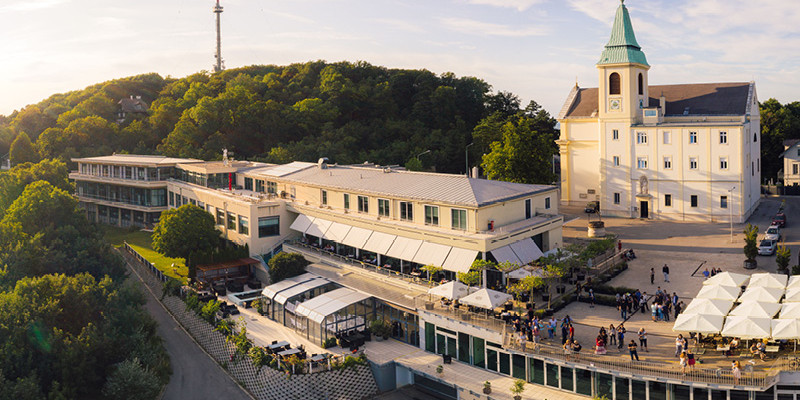
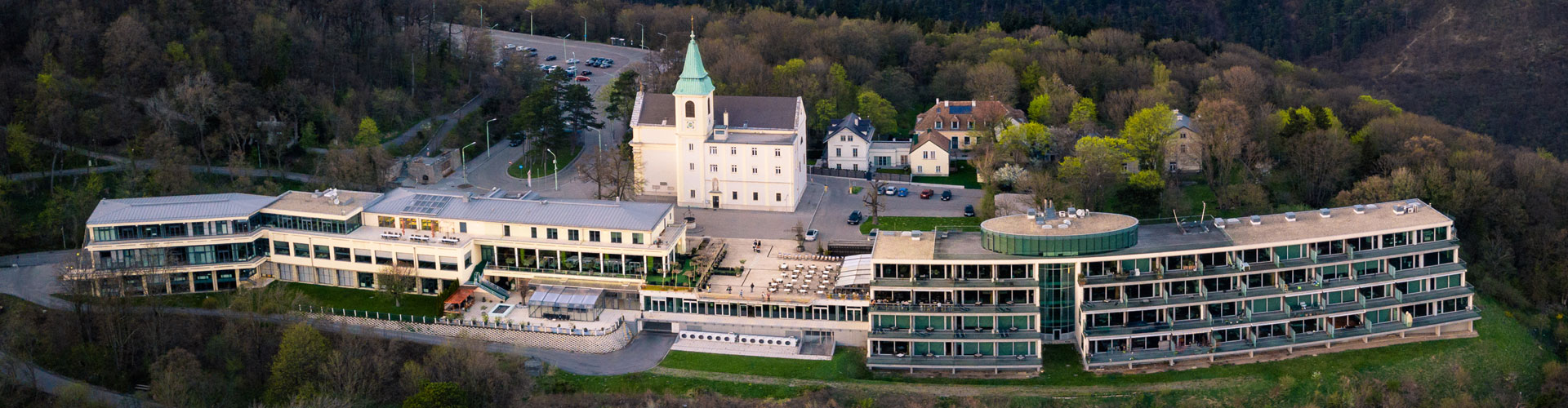
This year the annual Think Tank of the BEST Education Network was hosted at MODUL University Vienna. The BEST EN is an international consortium of educators committed to furthering the development and dissemination of knowledge in the field of sustainable tourism. At a BEST EN Think Tank, research is presented, sustainable tourism topics are addressed, and research and educational materials for use in undergraduate education are developed. 

The focus of this year’s think tank was ‘networking for sustainable tourism.’ 48 participants from universities all over the world made their way to Vienna to contribute to this conference. On two of the days, there were research presentations by the participants, which covered a wide range of topics with the common ground being networking and sustainability. These presentations provided a good introduction to the work that is being done within the field of networking by the people who are part of the BEST Education Network.  

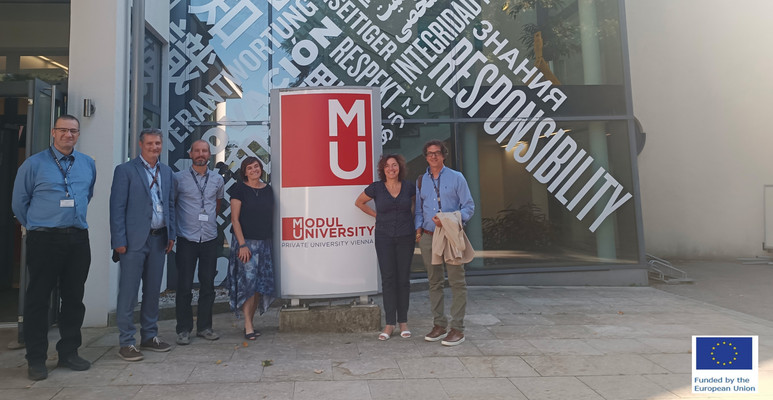
Representatives from the BEST Education Network at the conferenceRepresentatives from the BEST Education Network at the conference


The key notes were presented by Dr. Ulrike Gretzel from Texas A&M University and Dr. John Tribe from Surrey University, UK.

Dr. Ulrike Gretzel’s key note, “All’s Well That Networks Well: Harnessing the Power of Virtual Networks for Sustainability Research and Practice,” focused on virtual networks. Virtual networks open up new avenues for collaborative knowledge creation and exchange as well as the establishment of trust and social bonds necessary to form successful partnerships. Based on concrete case studies of virtual networks among students, residents and touristKey note by Ulrike GretzelKey note by Ulrike Gretzels, as well as research institutions and national parks, this presentation discussed the importance of virtual networks in tackling a complex phenomenon like sustainability in tourism research and practice. It also provided insights regarding the challenge of creating and sustaining technology-mediated connections. Some challenges mentioned included the divide between the old and the young generation, adaptation to technology and the importance of member participation in a network. Parallels were made with terrorist networks to exaggerate the different aspects of networks that need to work in order to effectively maintain a network over a period of time: Networks need to be maintained by the members, kept up to date, be inclusive and adapt to changes. When this is achieved, virtual networks can be a great source of knowledge exchange for the members.

Dr. John Tribe gave a key note titled “Tribes, territories and networks in the tourism academy.” He replicated Becher and Trowler’s study ‘Academic Tribes and Territories’ in the context of tourism. In line with their analysis, an epistemological enquiry was conducted which focused on the nature and the structure of the field (Territories) and a sociological enquiry was made focusing on the culture and practices of academics in the field. Whilst this traditional distinction brought some clarity to the understanding of tourism studies, additional insights into the complexity and dynamics of the field could be obtained by adding a further layer of analysis: Actor-network theory made links between relevant objects in the field and revealed the significance of academic networks in the development of the tourism academy.

His presentation showed that there are certain people, or key actors within the network of tourism academics who have the power to stipulate the direction in which the development of the field is moving. Within tourism academia, the esteemed elders have much power as they have gathered knowledge, and also because many of them are the gatekeepers of esteemed journals within the field. In addition, obligatory passage points for participation may be discriminating towards people who have other interests than the network leaders, and the English language may function as a barrier for inclusion. Tribe concludes that in order to create networks of power and solidarity, focus must be put on the existing barriers for entering into and working within a network. 

Also local industry players were given the chance to come together with academics to discuss common issues regarding networking for sustainability in the tourism industry:

On Monday, there was a networking lunch, during which seven networks were presented, including:

  • Ecoresearch.net (represented by Arno Scharl from MODUL University)
  • Ecotrans (represented by Herbert Hamele)
  • Green Globe (represented by Dr. Peter Zimmer)
  • Stattreisen Hannover (represented by Anke Biedenkapp) 
  • Innotour (represented by Dr. Janne Liburd)
  • Naturefriends International (represented by Dr. Christian Baumgartner)
  • World Travel and Tourism Council and the Tourism for Tomorrow Awards (represented by Susanne Kruegel)

    Networking lunch: WTTC representative Susanne Kruegel in discussion with Mylene Van der Donk from Breda UniversityNetworking lunch: WTTC representative Susanne Kruegel in discussion with Mylene Van der Donk from Breda University

  • After the networking lunch, there was a panel debate at the open industry forum, where many good insights and ideas were shared. On the panel were Bibiane Hromas from Platou, Karmen Mentil from ÖAR, Christian Pladerer from AIAE and Michaela Reitterer from Boutique Hotel Stadthalle. 

    Karmen Mentil represented Alpine Pearls – a network of 20 destinations in the European Alps that focus on sustainable travel, in particular soft mobility (reducing carbon emissions by encouraging use of public transport and similar
    initiatives).

    Christian Pladerer represented the Austrian Institute of Ecology – an NGO that supports projects within the realm of green event management. Their main focus is on energy policy and waste management, to promote low impact events (both within the environmental and social paradigm).

    Michaela Reitterer represented her Boutique Hotel Stadthalle, which is the first zero energy balance hotel in the world within an urban setting.

    Bibiane Hromas represented Platou – an interdisciplinary network of experts who provide a platform for architecture in tourism plan design which combines urban planning and landscaping design with tourism, destination management, business management and marketing. 

    Industry forum panel debate. From left: Moderator Dr. Deborah Edwards from University of Technology, Sydney; Karmen Mentil; Christian Pladerer; Michaela Reitterer and Bibiane Hromas.Industry forum panel debate. From left: Moderator Dr. Deborah Edwards from University of Technology, Sydney; Karmen Mentil; Christian Pladerer; Michaela Reitterer and Bibiane Hromas.

    Through the panel debate it became clear that networking was imperative for the purpose of knowledge sharing and transfer between business partners and clients, for communication purposes (which also included marketing), and for increasing business opportunities. The organisations make use of several types of networks (both face to face and online), including networks in which business partners are involved (primarily maintained for creating partnerships, sharing knowledge, education and for lobbying), and networks which include customers and clients (for the purpose of gaining business opportunities through feedback loops and for marketing purposes). All panel members emphasised the importance of networks for achieving success in today’s society. As such, focusing on networks and the challenges of creating and maintaining networks is important to identify potential problems which must be overcome to network effectively, a fact that was highlighted by the conference.

    On the last day of the conference, a research agenda and an educational module were developed based on a brainstorming session among thProf. Dagmar Lund-Durlacher, new BEST EN ChairProf. Dagmar Lund-Durlacher, new BEST EN Chaire participants. The participants worked in groups to address the issues brought up by the brainstorming, and structure these into modules which could be used for teaching and specific areas of research where there are gaps to be filled. These outcomes can be viewed on the BEST EN home page (link below).

    The conference also marked the change of location for the Chair of BEST EN: Dr. Janne Liburd of the University of Southern Denmark was succeeded by Dr. Dagmar Lund-Durlacher of MODUL University Vienna. Two other university employees are also on the executive committee, Anja Hergesell who represents PhD candidates in the Executive Committee and Tina Tiller, who serves as BEST EN secretary.

    All presentations and conference material are available on the BESTEN web page.


    Contact
    Dagmar Lund-Durlacher, MODUL University Vienna, Department of Tourism and Hospitality Management, Am Kahlenberg 1, 1190 Wien, Austria
    dagmar.lund-durlacher@modul.ac.at | www.modul.ac.at

    Comments

    Post new comment

    The content of this field is kept private and will not be shown publicly.
    • Web page addresses and e-mail addresses turn into links automatically.
    • Allowed HTML tags: <br> <p> <a> <em> <strong> <cite> <code> <ul> <ol> <li> <dl> <dt> <dd> <img> <span>
    • Lines and paragraphs break automatically.
    • Images can be added to this post.
    • You may use [inline:xx] tags to display uploaded files or images inline.
    • Use <bib>...</bib> to insert automatically numbered references.
    • You may post code using <code>...</code> (generic) or <?php ... ?> (highlighted PHP) tags.

    More information about formatting options

    CAPTCHA
    This question is for testing whether you are a human visitor and to prevent automated spam submissions.
    Image CAPTCHA
    Copy the characters (respecting upper/lower case) from the image.


    Sustainability Newsfeed
    News Newsfeed